Behind the Goal or Along the Touchline? Choosing a View
Compare behind-the-goal and touchline stadium seats by what you want to follow, then choose a view that suits your attention and the matchday you want.
Choosing stadium seats behind the goal or along the touchline changes how you take in a match. Behind the goal, attacks arrive along the pitch’s length; from the touchline, the field opens across your view. The distinction is less about a seat’s prestige than about the parts of play you want to follow.
That choice affects more than the moment of a shot. It shapes how easily you can track players before the ball reaches them, and how much attention you give to one end versus the whole field. Start with what you tend to watch, then check the specific seat rather than trusting a section label.
What does behind-the-goal seating make clear?
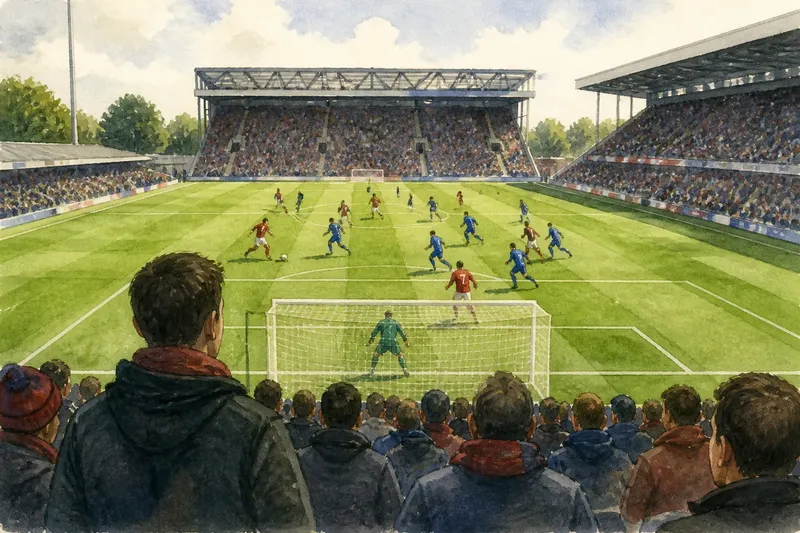
From behind a goal, the pitch runs away from you. You can follow an attack as it moves toward the penalty area and watch how a forward’s run relates to the defenders and goalkeeper. The depth of a developing chance is the main attraction.
The view can make the near goal mouth feel immediate. A winger carrying the ball inward, a teammate moving into the box, and a goalkeeper adjusting position form a sequence that is easy to follow. At the far end, though, players and contact can be harder to distinguish. The direction of a shot may be clear while its exact deflection is not.
This angle suits someone who pays attention to attacking runs, the space between a striker and the back line, or the goalkeeper’s position. It can also help you watch a defensive line shift as an opponent advances. You see the length of the attack, not just the ball’s current location.
What changes from a touchline seat?
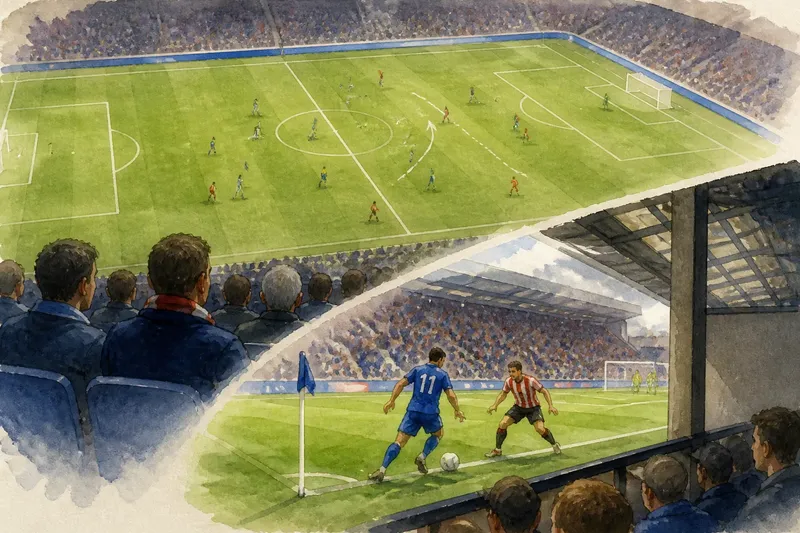
Along the touchline, the field spreads across your view. It is easier to compare positions across the width and watch a sequence travel from one side to the other. Team shape, switches of play, and pressing patterns become more legible than they usually are from behind a goal.
A side-on view also makes off-ball movement easier to notice. You might see a midfielder check over a shoulder while a fullback holds position and a winger waits for space. The ball still draws attention, but the wider arrangement gives you more reason to look away from it.
Perspective remains important. From a low seat, players can overlap one another, and the far touchline can feel distant. Touchline seating does not make every detail equally visible; it changes which relationships are easiest to read.
How do you choose stadium seats for your attention?
Ask what you follow when the ball is not near the goal. If you watch the striker’s run, an end-on seat may suit you. If you track midfield shifting across the pitch, a touchline view may be the better fit. Neither choice signals greater tactical virtue. It is simply a matter of where your attention goes.
- Observation: You follow runs toward goal and the gap between an attacker and the goalkeeper. Decision: If that depth matters most, choose behind the goal; otherwise compare a touchline block for its broader view.
- Observation: You watch switches of play and the team’s width. Decision: If those patterns matter most, choose along the touchline; if attacks toward one goal matter more, consider an end-on seat.
- Observation: You want the near goal to feel direct and close. Decision: If that is your priority, choose behind that goal; if you want both halves to feel more evenly presented, look toward the touchline.
- Observation: You want play to move across your view. Decision: If that helps you follow the match, choose a side-on position; if low-angle player overlap concerns you, compare a higher seat or inspect the seat view.
- Observation: A seat-view image shows a barrier, roof support, or likely obstruction from nearby spectators. Decision: If it blocks an area you care about, choose another seat; if it does not affect your main view, keep it in consideration.
- Observation: A block is near a corner rather than directly behind the goal or near midfield. Decision: If you accept a blended angle, consider it; if you want a clear end-on or side-on perspective, choose a seat closer to that alignment.
Imagine you are choosing between seats behind the north goal and in the east stand. Your stated starting point is that you want to spot forward runs before a pass, and you do not mind seeing the far goal from a distance. You choose behind the north goal, where the attacking channel is more directly in view. Your companion prefers to follow midfield shape, so the east stand better matches that preference; if you must sit together, the tradeoff is a shared view that favors one person’s attention more than the other’s.
How do height and distance alter the view?
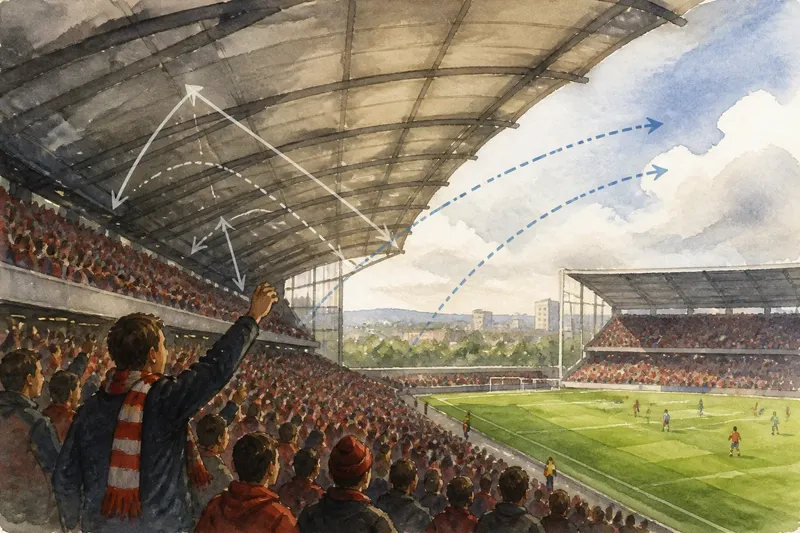
Height changes how much of the field you can see at once. A higher position can make spacing and the arrangement of players easier to read. A lower seat can make the action feel nearer, but players may hide one another when the ball is on the far side.
Behind the goal, a higher row can help clarify a pass and the spacing around the box; a lower one can make an attack toward your end feel more immediate. Along the touchline, added height can separate players in different lanes, while a low view may stack them together. These are tradeoffs, not rules that apply identically to every block.
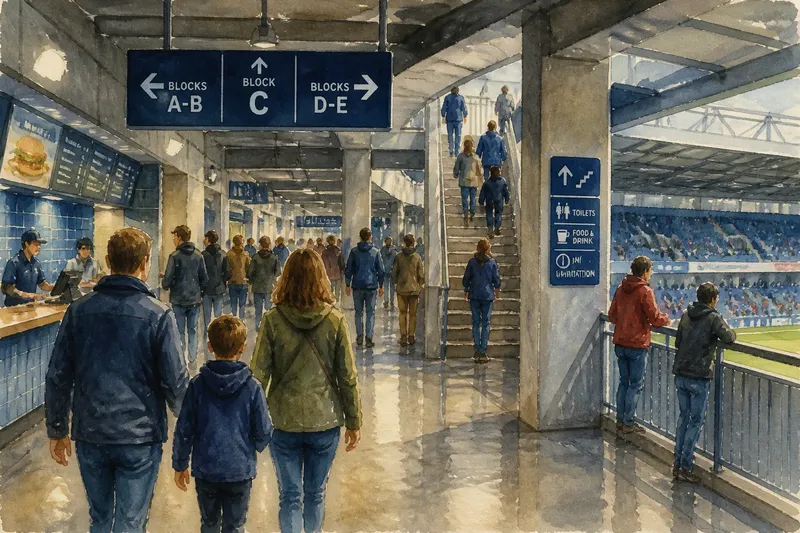
Distance also matters. A seat near the corner offers a more oblique view, while one near the halfway line tends to give a more balanced view of both halves. Check the stadium’s seat map and available view images for the exact position. A section name alone cannot tell you whether a barrier or roof support interrupts the sightline.
It is not worth chasing a perfectly central seat if the angle you prefer is already clear. A slightly offset position may suit the way you watch better than a seat that is central on paper but puts your preferred action at an awkward angle.
What questions help settle the seat choice?
Can you follow a through ball from behind the goal?
The end-on angle often makes the distance between a runner and the goal easy to judge. If the ball is far away, its precise path may be harder to read, so decide whether depth or close detail matters more to you.
Is a touchline seat better for seeing the team?
A side-on position often makes the team’s width and shifting shape easier to compare. A low seat or a blocked view can still hide players, so check the specific seat image if off-ball movement matters to you.
Which angle makes the near goal feel closer?
Behind the goal places attacks toward that end in a direct line, which can make the approach feel immediate. From the opposite end, that same goal may seem more distant.
Should you choose midfield or a goal-end block?
Choose near midfield if you want a side-on view of both halves and team shape. Choose a goal-end block if you care more about the approach to one goal and the depth of attacking runs.
How can companions agree on a view?
Name the difference in preference plainly. One person may want to see a forward’s run; another may want to follow passing patterns. A corner seat offers a compromise only if both are comfortable with an oblique view. It does not provide the full end-on or central side-on picture.
For a group, ask each person what they want to notice rather than who wants the “better” seat. One spectator may care about the goal mouth, while another wants a broad view of midfield. If people are considering different rows or blocks, check access arrangements and sightlines before treating nearby seats as interchangeable.
For a first visit, a side-on seat near midfield can work if your main interest is the overall pattern of play. If one end’s attacks are what hold your attention, an end-on view may be more satisfying, even with a less even picture of both halves.
Which stadium seats fit your preferred view?
Choose behind the goal if you want to follow depth, runs toward goal, and the shape of an attack. Choose along the touchline if you want to see width, passing patterns, and players moving in relation to one another. If you are still unsure, check the seat’s exact position and ask whether you prefer a direct view of one end or a broader view of both halves.
For a quick decision about stadium seats, follow the movement you naturally watch: runs toward goal point to an end-on view, while patterns across the field point to the touchline. Then check the seat’s height and any visible obstruction. That small inspection can matter more than finding the most central label on a map.